TRANSIENT ELECTROMAGNETICS
Reading resistivity changes below the surface
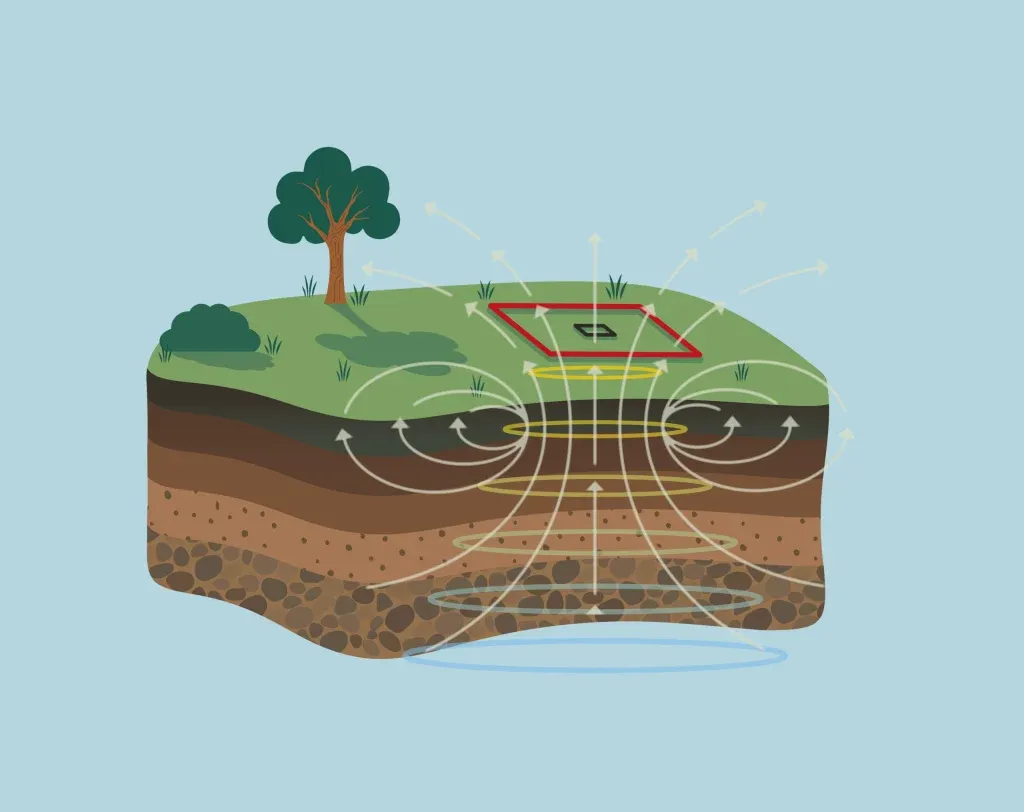
In a TEM survey, current is sent through a transmitter loop and then switched off. A receiver measures the resulting secondary electromagnetic response over time. The measurements are used to interpret changes in subsurface electrical resistivity.
Survey geometry, achievable depth and the interpretation depend on the instrument, ground conditions and project objective.

01 / METHOD
How a TEM measurement works
After the transmitter current is switched off, the receiver records the response as it decays. The recorded data are processed into resistivity models and interpreted with other site information.
02 / APPLICATIONS
Areas of investigation
- Mineral and sulphide ore exploration
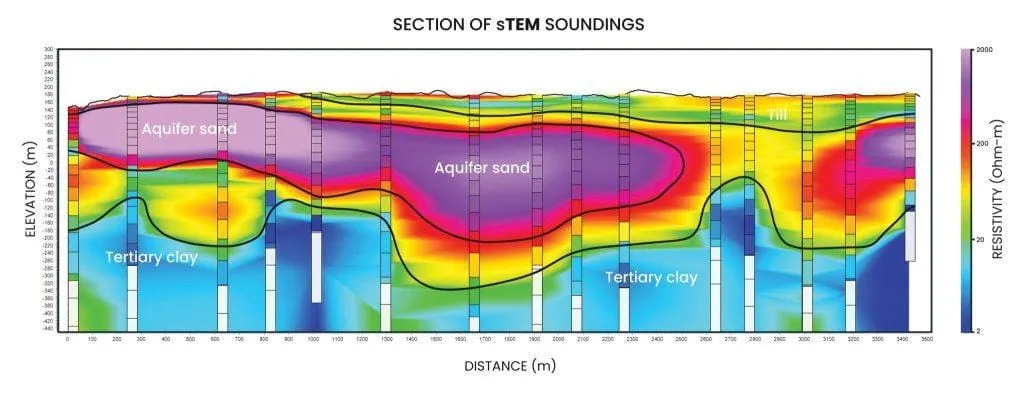
- Groundwater and aquifer investigation
- Freshwater and saltwater boundaries
- Fault and fracture zones
- Karst and geothermal investigations
- Environmental and infrastructure studies
03 / EQUIPMENT
Equipment used
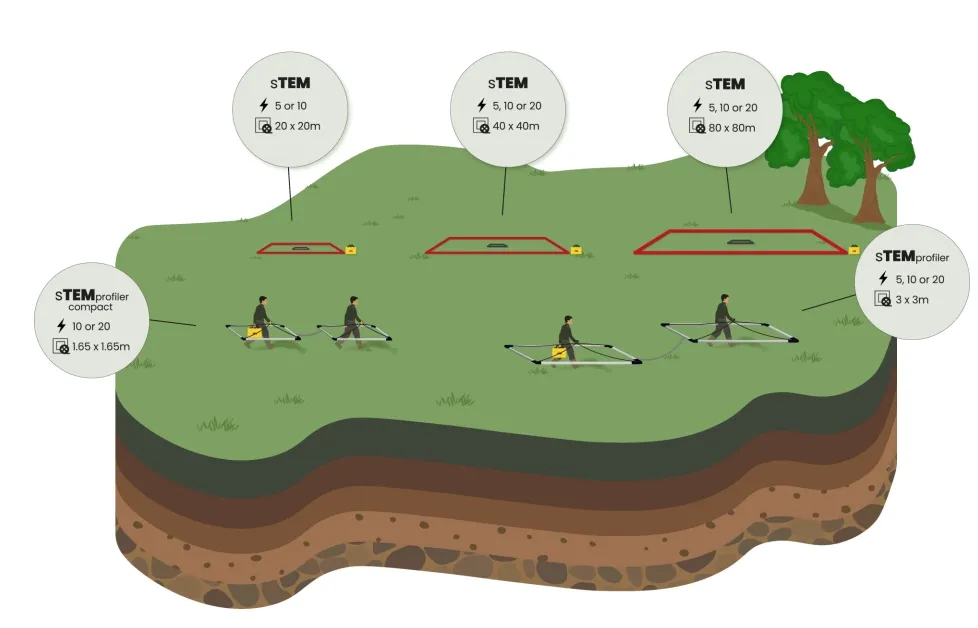
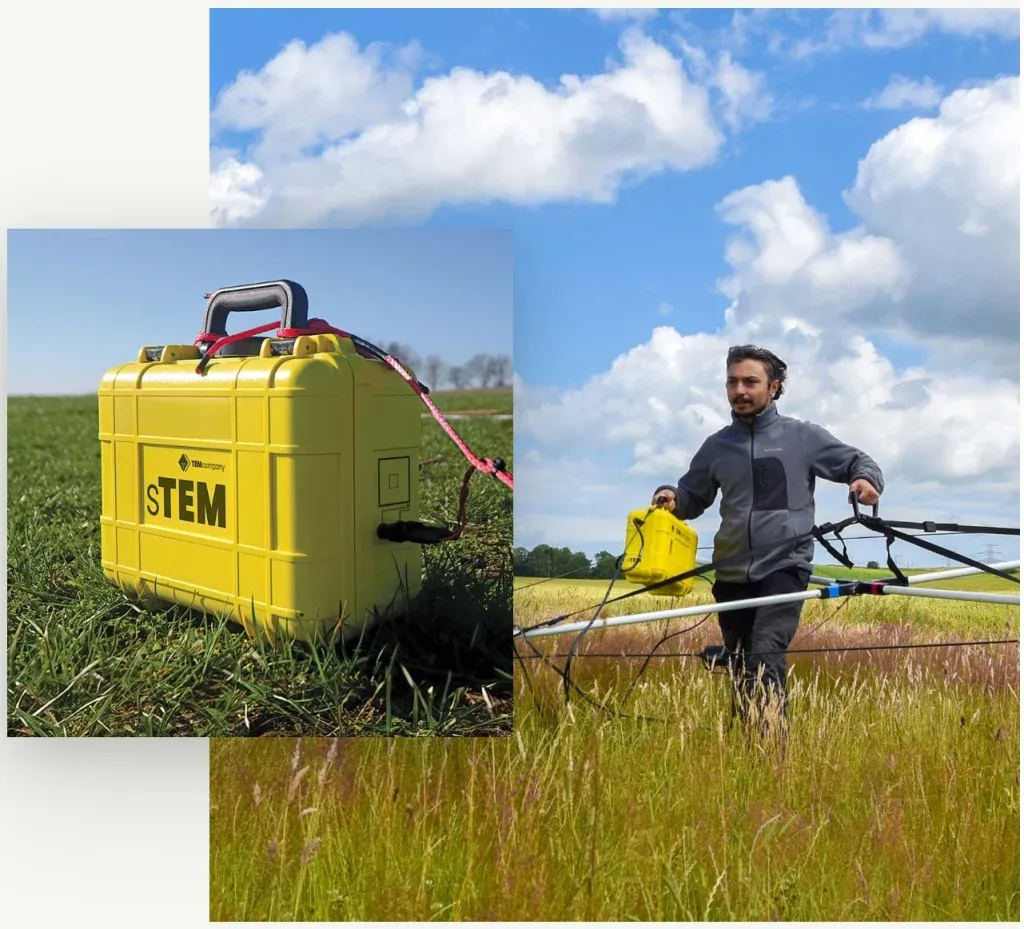
The source page lists these TEMcompany instrument families. Each has its own survey configuration.
04 / FIELD AND DATA
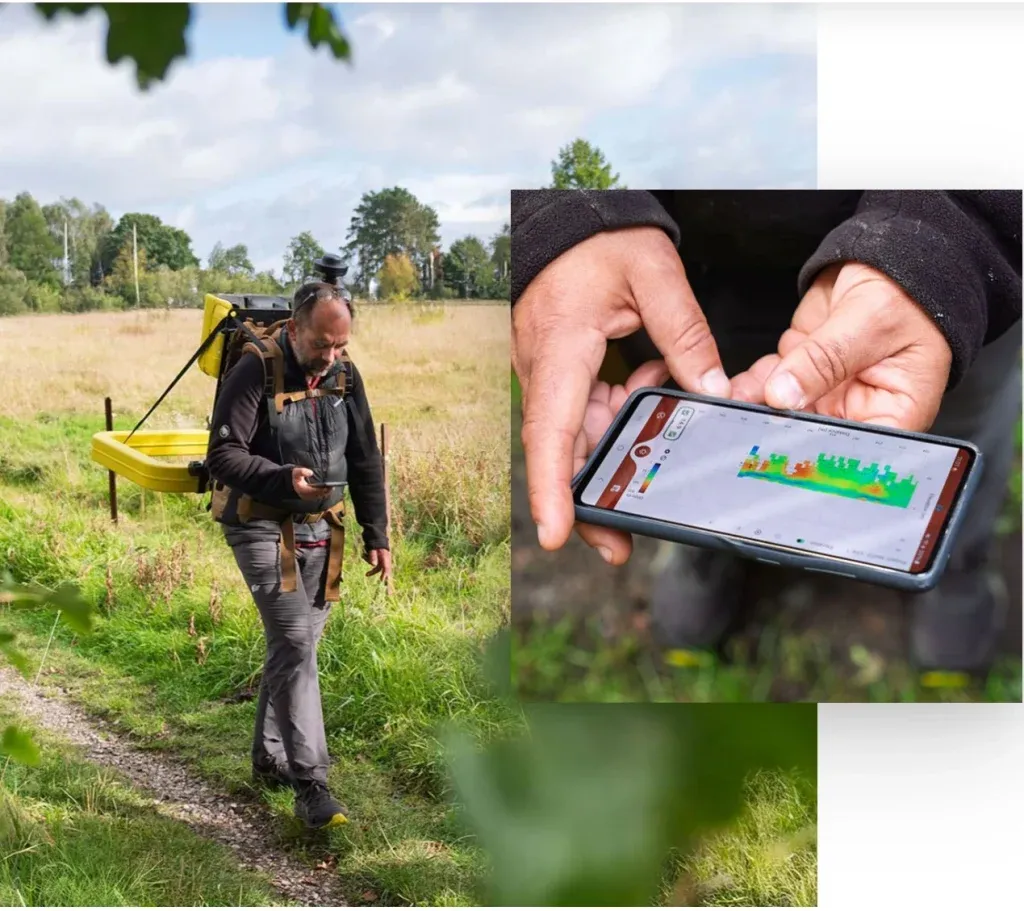
Method and survey views